

News & Blogs
Webinar Recap: Reflecting on Community Attitudes Toward Autism and Advancing Inclusive Museum Practice
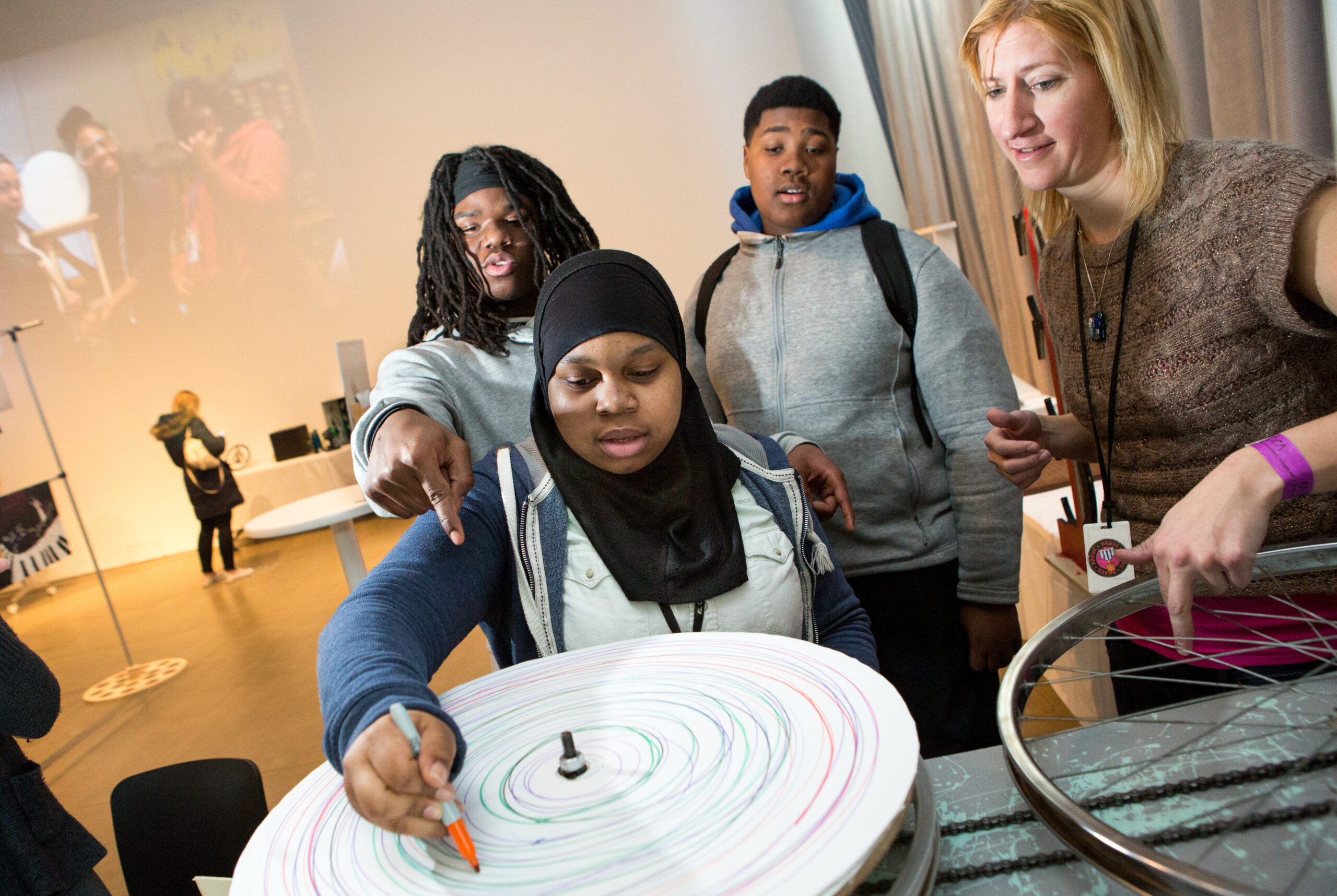
The Neuroinclusive Learning Network’s (NILN) first webinar in our ongoing series launched last month and is now available to watch on the NILN website. Dr. Nicole Mathews, Director of Research at the Southwest Autism Research and Resource Center—and one of the partners in this project—shared recent findings about community attitudes toward autism, following a brief overview of how autism spectrum disorder (ASD) is defined.
As the number of people diagnosed with autism continues to grow, museums have an opportunity to better understand how to support neurodiverse learners and communities. Listening to the webinar left me thinking about three ideas that feel especially important for museum practice, viewed through the lens of my decades of museum leadership and research.
-
It’s time to stop framing inclusion as accommodation and start framing it as an investment.
One of the most striking things I learned was that, when this research began, the team couldn’t find a validated way to measure community attitudes that wasn’t rooted in deficit thinking. Existing measures assumed autism represented either a problem to overcome or, at best, something neutral. None asked how are people on the autism spectrum contributing to their communities?
So, the research team developed and validated a new measure—the Meaningful Autistic Inclusion Attitude Scale (MAIA)—that intentionally asks whether people believe people on the autism spectrum add value to their communities, not simply whether they deserve acceptance. It also explores people’s willingness to invest resources in inclusion.
That feels like an important shift for museums. Instead of asking, “How can we accommodate autistic visitors?” perhaps we might also ask, “How does our museum become stronger when autistic people fully participate?”
In the first phase of this project, we’ve already seen evidence that this happens. Designing for a broader range of learners often produces better exhibits for everyone. New perspectives strengthen interpretation. Partnerships deepen community relationships. This is an asset-based way of thinking about inclusion, and other research has shown that asset-based narratives are a powerful foundation for building stronger communities. This leads to the next big idea:
-
Inclusion is relational—not just environmental.
Many museums committed to inclusion have focused on sensory kits, quiet hours, visual schedules, and sensory maps. These matter. They remove barriers, and they make visits easier.
But this research also examined interpersonal inclusion—whether autistic people are welcomed into friendships, workplace relationships, and community life. That’s a different question altogether. It made me wonder whether museums consider questions such as:
- Do autistic visitors feel that they belong here?
- Do staff know how to begin genuine conversations with visitors on the autism spectrum?
- How are museum policies supporting the success of staff on the autism spectrum?
- Are volunteers on the autism spectrum integrated into teams rather than working separately?
- Are youth on the autism spectrum participating alongside their peers rather than only being allowed to attend an accessible program?
Accessibility helps someone through the door. Belonging is what brings them back.
-
Experience changes attitudes better than information alone.
One of the major outcomes of this project is the online training we’re developing for museum staff. Over the past year, we’ve worked to translate what we learned in the research into practical learning experiences for staff across the museum.
The research reviewed in the webinar reinforced something for me: people’s attitudes change through experience. They change when people invest in inclusion and when they encounter people on the autism spectrum as contributors, colleagues, and leaders—not simply as recipients of accommodation.
Throughout this project we’ve involved individuals on the autism spectrum as advisors to the overall initiative, individual museum projects, and the research itself. Listening to the webinar, though, made me think we can go even further. Rather than stopping at consultation, how do we create more opportunities for people on the autism spectrum to lead?
That might mean:
- inviting educators on the autism spectrum to co-facilitate staff training
- supporting staff on the autism spectrum or volunteers in being successful leaders
- including autistic voices throughout exhibition development
- featuring autistic scientists, artists, makers, and historians as experts—not simply within accessibility programming
For me, that’s an important evolution. We can move beyond learning about autism to add working alongside colleagues on the autism spectrum. That feels entirely consistent with how we’ve defined inclusion throughout this project and with the training we’re developing.
Ultimately, this research argues that meaningful inclusion goes beyond acceptance. Acceptance is a relatively low bar. Meaningful inclusion recognizes people on the autism spectrum as contributors whose participation strengthens the entire community.
For years, museums have asked, “How do we welcome autistic visitors?” This research invites us to ask a different question: “How does supporting visitors, volunteers, staff, and collaborators on the autism spectrum make our museums better?” For me, that’s the biggest takeaway from this research. Inclusion isn’t simply about making room for people on the autism spectrum in museums. It’s about recognizing that museums themselves become richer, smarter, and more relevant when people on the autism spectrum help shape them.
***
For more information about this project, MAIA or the research please visit the NILN website at www.neuroinclusivelearningnetwork.com.
Judith Koke is a seasoned museum leader and a Senior Fellow at the Institute of Learning Innovation involved with this project.
This material is based upon work supported by the National Science Foundation under Grant No. 2314100. Any opinions, findings, and conclusions or recommendations expressed in this material are those of the author(s) and do not necessarily reflect the views of the National Science Foundation.
Related Resources
Ideas in Action

Let’s Work Together!
Join our network of clients and collaborators working to accelerate learning in their organizations and communities.