

News & Blogs
Making Museums More Inclusive for the Autism Community: The NeuroInclusive Learning Network

For several years now, we have been working on a project focused on “Building Capacity for Inclusive Informal STEM Learning Opportunities for People with Autism Spectrum Disorder”. It is a long name for a simple but important idea: how can museums become places where more people feel supported, included, and able to learn? Along the way, we found ourselves drawn to a shorter name that better reflects the spirit of this work: the NeuroInclusive Learning Network[1].
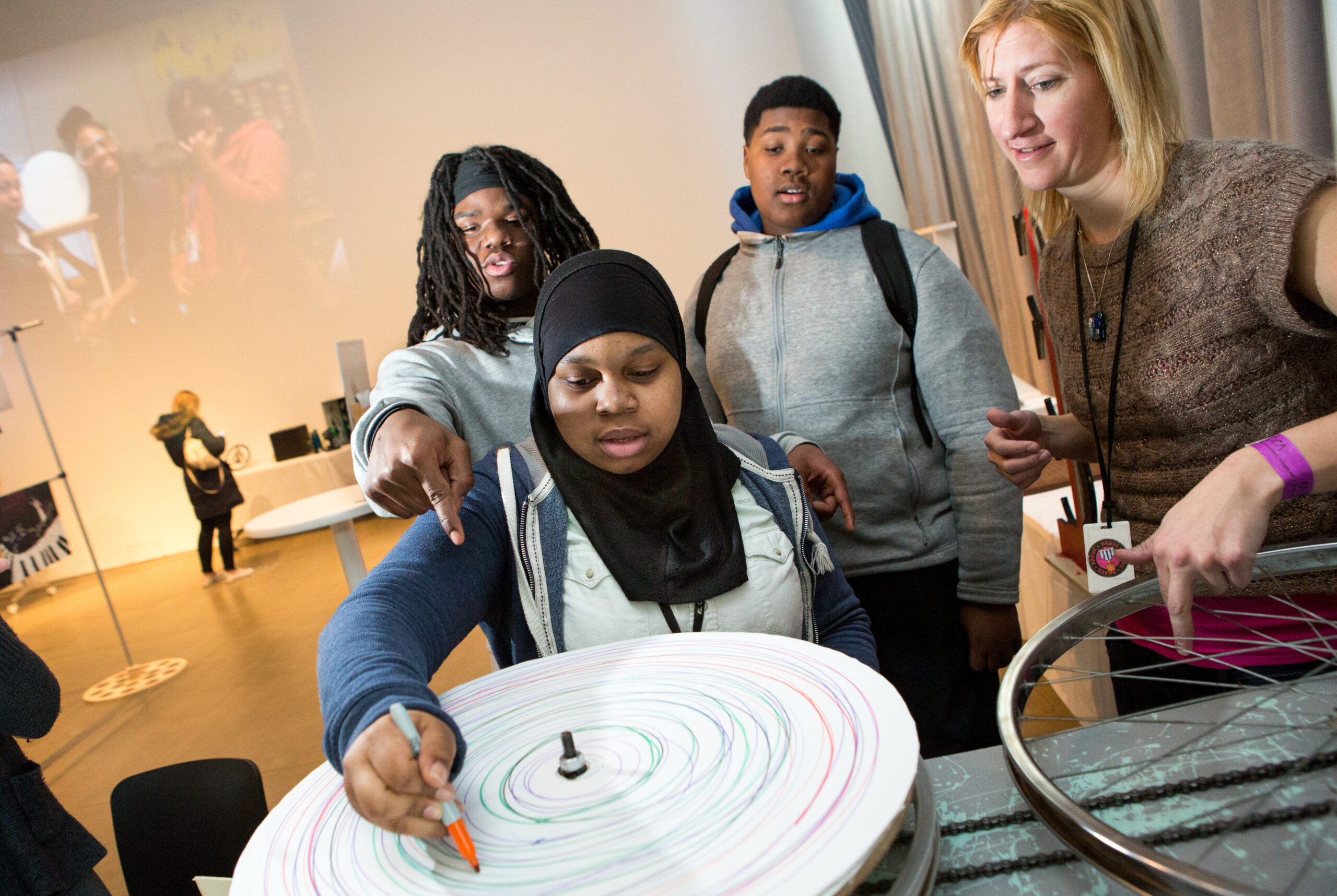
Museums can be powerful places for learning. They offer opportunities to explore ideas in active, hands-on ways. Visitors can engage directly with materials, try things out for themselves, and return to the same experience more than once. In museum settings, learning often happens through curiosity, repetition, movement, conversation, and discovery. Concepts that might feel abstract in a book or classroom can become tangible in an exhibit space. For many people, that makes museums exciting, memorable, and meaningful places to learn.
At the same time, museums do not work equally well for everyone. Experiences that seem inviting and engaging for some visitors can feel overwhelming, confusing, inaccessible, or unwelcoming for others. Sometimes the barriers are physical. Sometimes they are sensory, social, or structural. Sometimes they are built into the assumptions museums make about how visitors will move through a space, communicate, participate, or show what they are learning. If museums want to serve their communities well, they have to ask not only what they are offering, but also who those offerings are really working for.
That question sits at the center of this project. Museums across the country have come together to form a Community of Practice focused on thinking deeply and learning together about inclusion in informal STEM learning environments. This work is not about finding a quick fix or following a simple checklist. Inclusion is not something that can be fully addressed through a single accommodation or one-time training. It requires reflection, collaboration, and a willingness to rethink longstanding practices. It means asking honest questions: Who do we serve well now? Who may not feel fully supported in these spaces? Where do barriers exist, even when they are unintended? And what changes might help museums better welcome and support a wider range of learners?
In this project, we are beginning with autism as an important and tangible starting point. Focusing on autism gives us a meaningful way to think concretely about inclusion, learning, participation, and support. We are partnering with the Southwest Autism Research & Resource Center (SARRC), an organization with deep expertise in helping educators and families create effective learning opportunities for individuals on the autism spectrum. Their knowledge is helping shape how participating museums think about learning differences, visitor needs, and practical ways to create more inclusive experiences.
We are also partnering with SciTech Institute, whose involvement helps strengthen the connection between this work and the day-to-day realities of informal STEM learning environments. Support from partners like SciTech is important because inclusion is not only an abstract goal. It has to be grounded in real practice, real spaces, and real interactions with visitors. By bringing together research, practitioner knowledge, and lived experience, this project aims to help museums move from good intentions to meaningful action.
A central question guiding this work is this: How can museums make thoughtful, realistic changes to what they already do well so they can better support people with a wider range of learning needs? In some cases, the answer may involve changes to exhibit design or facilitation strategies. In other cases, it may involve staff training, new ways of thinking about sensory experiences, clearer communication, or stronger relationships with families and communities. The goal is not to create separate experiences for a small number of visitors, but to help museums build environments that are more inclusive from the start.
As part of the project, SARRC will also be exploring how museum changes affect the learning experiences of individuals on the autism spectrum. That matters because inclusion is not only about what museums intend to do. It is also about what visitors actually experience. Understanding whether changes make a real difference for learners and families is essential if museums are going to build approaches that are both thoughtful and effective.
The Institute for Learning Innovation is leading this project and studying both the impact of the training program we’ve developed for museum staff and the development of the professional community growing around this work. We are interested not only in whether particular strategies are useful, but also in how museum professionals learn from one another, how their thinking changes over time, and what conditions help inclusive practices take root and last. In other words, this project is about both improving visitor experiences and building the capacity of museums to do this work well.
As we engage additional museums in St. Louis, Miami, Oklahoma City, and Phoenix in the coming weeks and months, we hope to better understand which strategies, structures, and partnerships matter most. We want to learn what helps museum professionals shift their thinking, what supports meaningful change in practice, and what lessons may be useful for other organizations. Ultimately, we are focused on identifying tools, resources, and strategies that can be shared more broadly and scaled to support museums across the country.
This work is rooted in the belief that museums can and should be places where more people feel welcomed, supported, and able to learn in ways that work for them. We look forward to continuing to share what we’re learning and how it’s being put into practice in the museums that are currently part of the network. And we look forward to expanding the network – partnering with more museums teams across the country that share this belief and are taking practical steps to build more inclusive museums.
[1] The network is a collaborative made up of the Institute for Learning Innovation, the Southwest Autism Research & Resource Center, and the SciTech Institute. This work is supported by the National Science Foundation under Award No. 2314100.
Related Resources
Ideas in Action

Let’s Work Together!
Join our network of clients and collaborators working to accelerate learning in their organizations and communities.