

Projects
Family-Centered STEAM in Rural Communities
Client Name
High Desert Museum
Service
Learning Programs & Experiences
Category
Family Learning
Sponsor
NSF
Location
Rural Communities (OR, TX, NY)
Project Recap
In partnership with four informal learning organizations across the United States, this project explores how culturally sustaining, place-based STEAM programs can be co-designed with families in rural communities. Together, partners are developing and studying multi-day family learning experiences that honor community knowledge, deepen belonging, and connect science learning to everyday life.
Project Overview
Across rural communities in the United States, informal learning organizations are partnering with families to design STEAM experiences grounded in local knowledge, cultural heritage, and everyday life. This collaborative effort explores what it looks like to build family programs with communities rather than for them, and how culturally sustaining approaches shape learning, belonging, and connection to place.
Funded by the National Science Foundation and lLed by the High Desert Museum in Bend, Oregon, this project brings together four informal learning sites across the U.S., the High Desert Museum (OR), the Wild Center (NY), Caddo Mounds State Historic Site (TX), and Oregon Coast Aquarium (OR) — , along with their community partners, researchers from the Institute for Learning Innovation, and Reimagine Research.
The work is guided by a culturally sustaining approach to teaching and learning that centers families as knowledge-holders and co-creators, rather than asking them to fit into pre-designed programs. In practice, this means:
- Centering the values, worldviews, needs, experiences, knowledge, and interests of families.
- Designing environments where families experience belonging within programs and informal learning spaces.
- Supporting families in deepening their understanding of the broader community, their own communities, each other, and themselves.
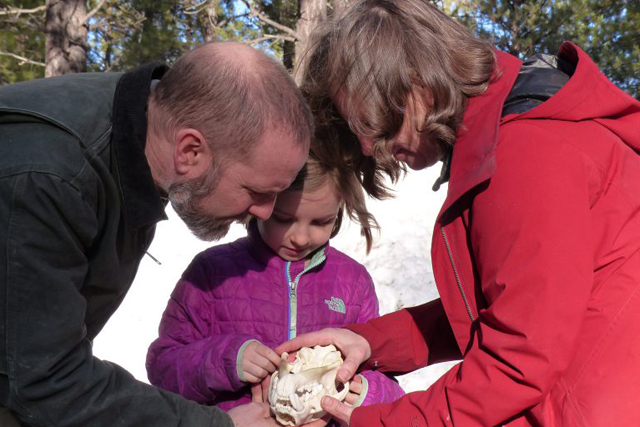
Each site designs multi-day programs for families with children ages 8-11 that reflect their own community context. Families might track wildlife and use camera traps, explore coastal conservation, weave together Western science and Indigenous knowledge through art, or investigate what makes a natural community thrive.
Programs unfold over consecutive days or weekends, creating time for families to build relationships, share stories, and explore STEAM together in ways that connect to their everyday lives and familiar places.
As the research partner, ILI studies how culturally sustaining, place-based approaches influence family participation, belonging, and learning outcomes. Insights from this work contribute to a growing understanding of how informal learning environments can meaningfully support community-centered family learning.
Related Projects
Ideas in Action



Let’s Work Together!
Join our network of clients and collaborators working to accelerate learning in their organizations and communities.